The Small Styling Shift That Changes How a Whole Outfit Reads
Quick Answer: Most outfits that feel “off” without an obvious reason have an imbalance between the visual weight of the top half and bottom half — a loose top over loose bottoms, or a fitted top with an equally fitted bottom, both tend to read as flat or unbalanced. The fix is almost always contrast: pairing a fitted element with a relaxed one, rather than matching volume top and bottom.
You’ve probably had an outfit that used good pieces individually and still felt wrong together — not because anything was ugly, but because nothing in the outfit was creating contrast for the eye to organize around.
Why does matching volume top and bottom tend to look flat?
The eye uses contrast to read shape and proportion — without it, an outfit can visually blend into a single undefined silhouette rather than reading as an intentional shape. Two loose, relaxed pieces worn together often erase the waist definition entirely, while two fitted pieces together can look flat or one-note rather than dynamic.
This isn’t about needing a “defined waist” specifically — it’s about needing some point of visual contrast, which a defined waist is simply the most common way to create.
What’s the fastest way to apply this without buying anything new?
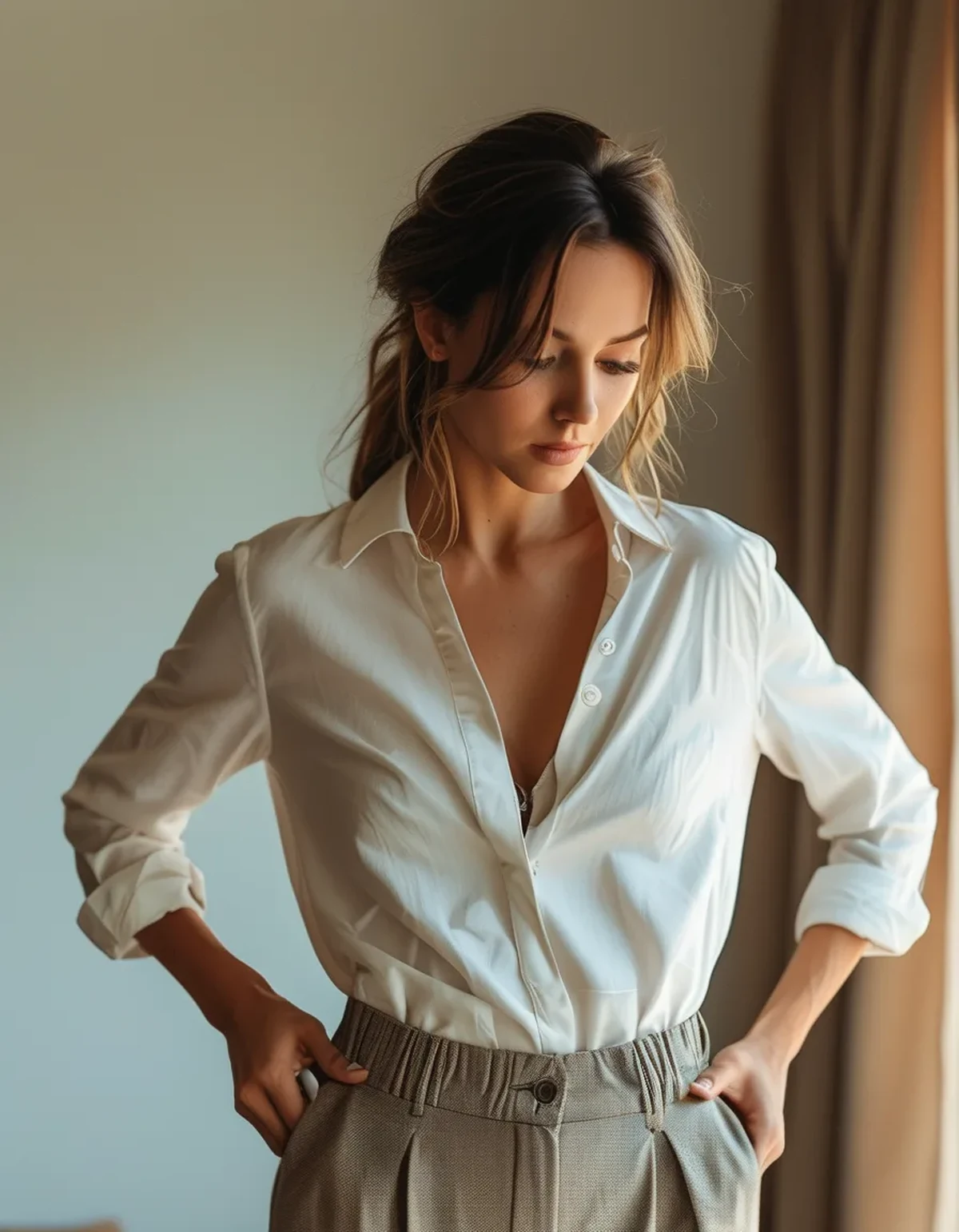
Tucking in even a loose top (fully or in a “French tuck,” tucking only the front) instantly creates a waist-level contrast point using pieces you likely already own, without needing a single new garment. Cinching a loose silhouette with a belt achieves a similar effect for pieces that can’t be tucked.
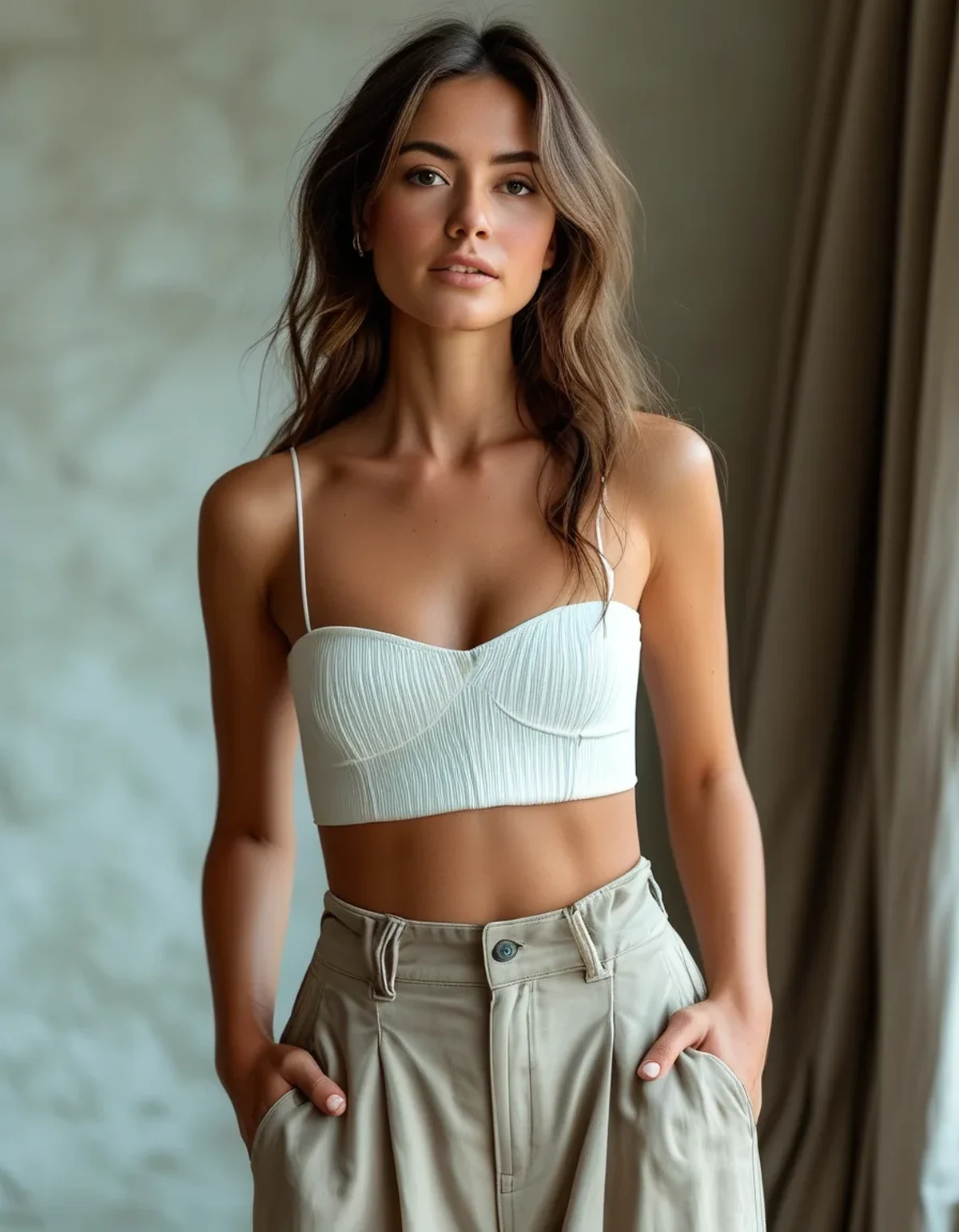
The reverse also works: pairing a fitted top with a more relaxed, wide-leg or flowing bottom creates the same contrast from the opposite direction, which is useful on days a tucked-in look doesn’t suit the specific top.
What Nobody Tells You About Proportion Styling
This principle applies across essentially every body type and height, which is part of why it’s one of the most consistently repeated pieces of styling advice across very different style philosophies — it’s not body-type-specific advice, it’s a proportion principle. Most people already own the pieces needed to apply it; the shift is usually in how those pieces get combined and finished (tucked, belted, layered), not in what gets purchased.
TL;DR:
- Matching volume top and bottom (loose-loose or fitted-fitted) tends to read as flat or unbalanced
- Contrast between a fitted element and a relaxed one is what gives an outfit visual structure
- Tucking in a top, even loosely, is the fastest way to create that contrast without buying anything new
- This principle works across all body types and heights — it’s a proportion rule, not a body-type-specific fix
The outfit that felt “off” for no clear reason usually just needed one point of contrast — and that’s almost always available in the closet you already have.
Keep Reading
This article is for general informational and styling purposes only. Fit, sizing, and product availability may vary.