Why the Same Heel Height Changes Your Leg Line Differently Depending on the Shoe
Quick Answer: Heel height alone only partially determines the leg-lengthening effect — the vamp cut (how much of the top of the foot is exposed), toe shape, and where the shoe’s throat line sits on the foot all independently influence how much visual leg line is created, which is why two shoes with the same measured heel height can produce noticeably different proportional effects.
Heel height gets all the attention, but it’s really just one variable among several that together determine how much leg-lengthening effect a shoe actually delivers.

Why does vamp cut matter as much as heel height for this visual effect?
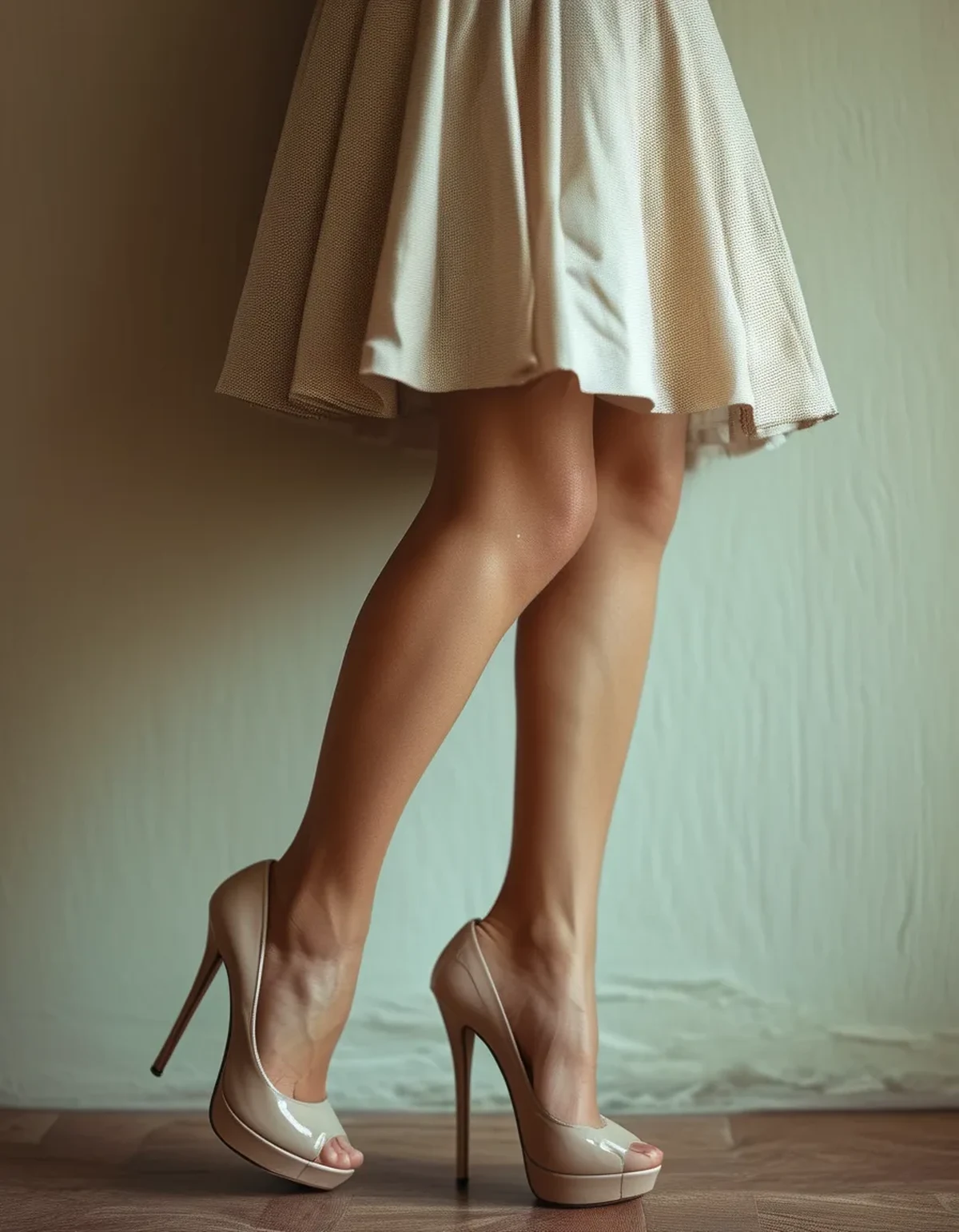
The vamp is the part of the shoe covering the top of the foot, and a lower, more cut-away vamp exposes more bare foot, which visually extends the line of the leg further down before the shoe’s structure interrupts it. A higher, more covering vamp cuts that visual leg line short at a higher point, meaningfully reducing the leg-lengthening effect even at an identical heel height to a lower-vamp style.
Does toe shape actually play a measurable role in this same effect, separate from vamp cut?
Yes — a pointed toe creates a longer, more tapered visual line that extends the eye’s read of the foot and leg together, while a rounded or square toe creates a more abrupt visual stopping point. Combining a low vamp with a pointed toe produces a noticeably stronger leg-lengthening effect than a high vamp with a rounded toe, even when heel height is held constant across both.
What is the throat line, and why does its placement matter for this same visual effect?
The throat line is where the shoe’s opening begins relative to the arch of the foot, and a throat line cut higher up the arch (closer to the ankle) creates a shorter visual foot-to-shoe transition than one cut low and close to the toes. A lower throat line lengthens the visible arch of the foot, which contributes to the overall leg-lengthening illusion independent of the actual heel height.
Is there a specific combination of these design elements considered most effective for maximizing leg length illusion?
A low-cut vamp, pointed toe, and low throat line together are generally considered the most leg-lengthening combination, often seen in classic pointed-toe pumps — this combination maximizes visible foot and arch length before the eye reaches the heel itself. Shoes lacking any of these three elements, even at a tall heel height, noticeably underdeliver on the leg-lengthening effect relative to their heel height alone.
The Small Styling Shift That Changes How Heels Read
Swapping a rounded-toe heel for a pointed-toe style at the exact same heel height is one of the most reliable, low-effort ways to meaningfully increase the leg-lengthening effect of an existing shoe wardrobe — it requires no change in comfort tolerance for heel height itself, just a different silhouette choice, making it an accessible adjustment for anyone who already has a heel height they’re comfortable in.
FAQ: Heel Design and Leg-Lengthening Effect, Answered
Does ankle strap placement affect this leg-lengthening illusion as well?
Yes — an ankle strap positioned higher up the ankle tends to visually cut the leg line at that point, generally reducing the leg-lengthening effect compared to a strapless or lower-strap style.
Is this leg-lengthening effect purely about heel design, or does hemline length interact with it too?
Hemline length interacts significantly — a hemline that reveals more leg above the shoe amplifies whatever leg-lengthening effect the shoe itself provides, while a longer hemline mutes it regardless of shoe design.
Can a low vamp and pointed toe compensate meaningfully for a genuinely lower heel height?
To a real degree, yes — while it won’t fully replace the effect of significant heel height, a well-chosen low-vamp, pointed-toe silhouette at a moderate heel height can outperform a high heel with a covering vamp and rounded toe.
TL;DR:
- Heel height is only one of several factors determining a shoe’s actual leg-lengthening effect
- A low vamp exposes more foot, extending the visual leg line further before the shoe interrupts it
- Pointed toes create a longer visual taper than rounded or square toes at the same heel height
- A low throat line further lengthens the visible arch, compounding the overall effect
Two heels with identical height can read completely differently on the leg — vamp cut, toe shape, and throat line together do as much work as the heel measurement itself.
Keep Reading
This article is for general informational and styling purposes only. Fit, sizing, and product availability may vary.