Why the Same Trousers Look Longer With One Shoe and Shorter With Another
Quick Answer: Your eye reads leg length as one continuous vertical line, and it stops wherever the colour or shape breaks. A shoe that matches your trousers or your skin tone extends that line and the leg reads longer. A contrasting shoe, an ankle strap, or a chunky sole creates a hard stop and the leg reads shorter, regardless of the actual hem. The single most effective proportion tool is colour continuity from hem to toe, and it costs nothing.
Same trousers, same mirror, ten minutes apart. One pairing looks elongated and deliberate and the other looks slightly stumpy and you cannot say why.
This blog has covered why the same hem length works differently on two people the same height and why tucking changes proportion more than hem length. Footwear is the biggest of these effects and the easiest to control.
Why does shoe colour change apparent leg length?
Because visual continuity is what your eye measures, not anatomy.
Your eye follows an uninterrupted line until something breaks it. A vertical run of one colour reads as a single element. Introduce a strong colour change and the eye registers two separate elements, each shorter than the whole.
Matching the shoe to the trouser removes the break entirely. Black trousers with black shoes read as one continuous column from waist to floor. The eye has no reason to stop at the ankle, so the leg reads as running all the way down.
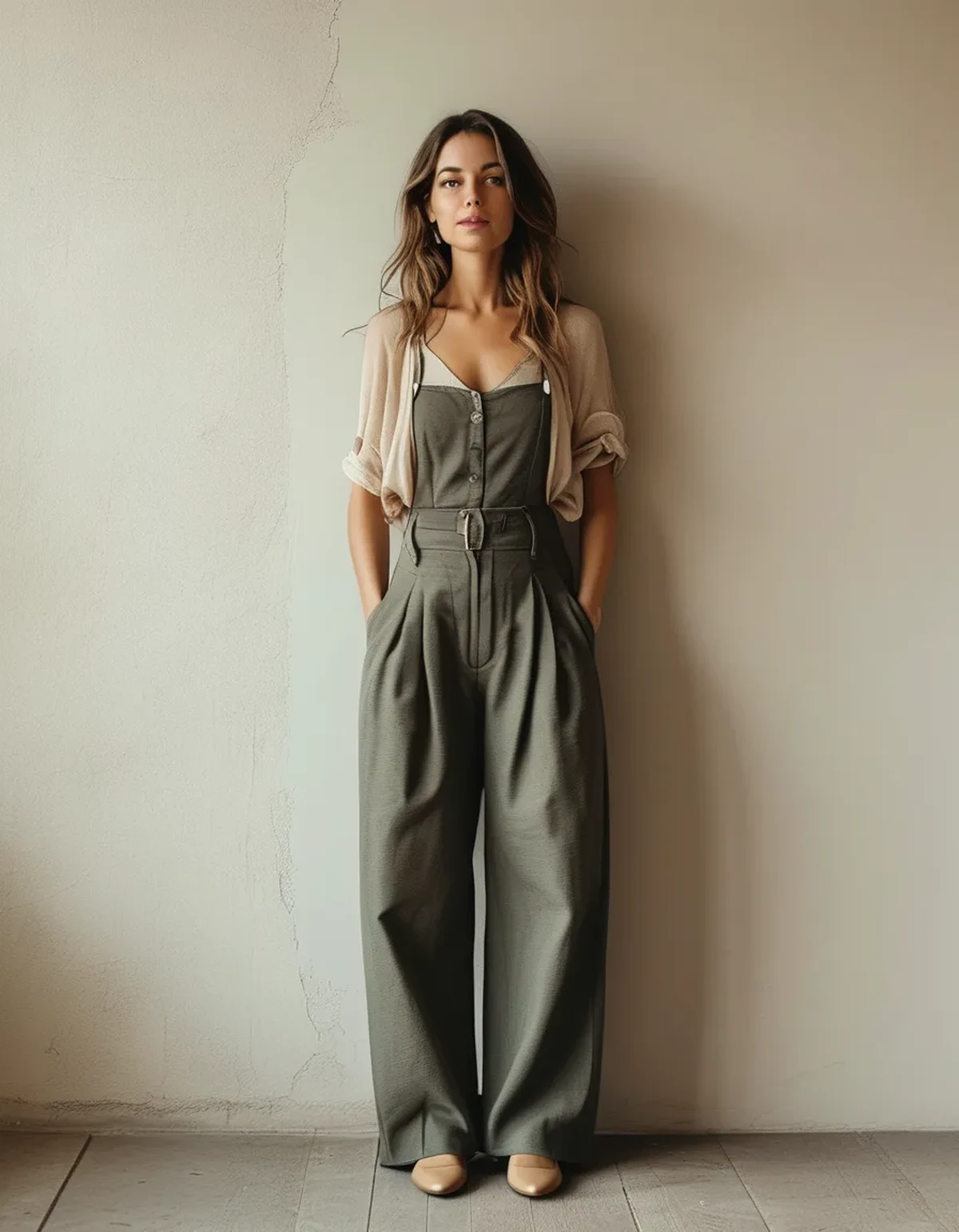
Matching the shoe to your skin tone does the same thing in a different way. A nude shoe close to your own skin tone reads as an extension of your leg rather than as an object. This is why the effect is specific to your skin tone rather than to any particular beige.
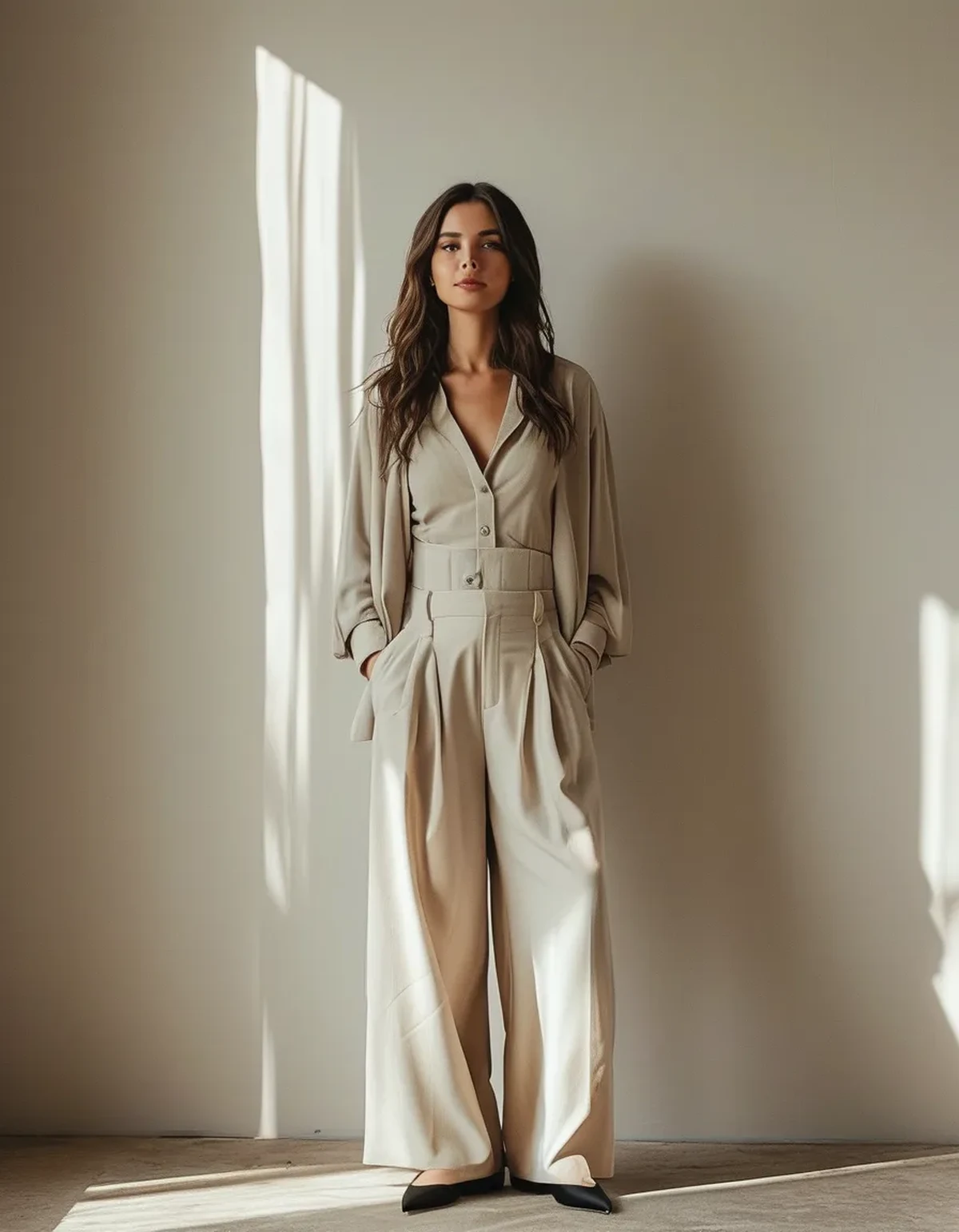
A contrasting shoe creates a hard stop. White trainers with dark trousers, or black shoes with cream trousers, place a strong horizontal boundary at your ankle. Everything below the break stops counting as leg.
Ankle straps are the most severe version of this. A horizontal band at the narrowest point of the leg visually cuts it, and the effect is much stronger than the strap’s actual width suggests. This is why ankle-strap shoes are notoriously unforgiving on shorter legs.
And the vamp line matters too. How much of the top of your foot a shoe covers changes where the line ends. A low-cut vamp showing toe cleavage extends the visual line further than a high-cut one that stops at the base of your toes.
Which shoes actually lengthen the leg?
In rough order of effect, and heel height is not top of the list.
1. Colour continuity with the trouser or with your skin. This outranks every other factor. A flat shoe matching your trousers beats a contrasting heel for apparent leg length in almost every case.
2. A pointed or almond toe. The point extends the visual line beyond your foot, adding apparent length. A round or square toe stops the line abruptly at the same place your foot ends.
3. A low vamp. Shoes cut low across the top of the foot show more of the instep and continue the line. Higher-cut shoes and most boots cut it earlier.
4. A thin or invisible sole. A chunky sole is a visible horizontal block at the bottom of your leg. A slim sole reads as almost nothing.
5. Heel height, which matters less than everything above. A heel adds real height and it is the least efficient of these tools. A contrasting chunky heeled shoe can easily read shorter than a matching flat.
And a few reliable combinations:
- Cream or ivory trousers with a nude or matching cream shoe is one of the strongest looks available for late summer, and it works in flats.
- Dark trousers with dark shoes and a dark sock creates an unbroken column, which is why suiting has done this forever.
- Denim with a shoe close to the wash’s mid-tone, rather than white or black, keeps the line going in a way that stark contrast does not.
The exception is when you want the break. A deliberate contrasting shoe draws the eye to the foot and can be exactly the point of an outfit. This is a tool, not a rule, and it is worth knowing which way it pushes so you can choose.
How does hem length interact with the shoe?
It decides how much skin or gap sits between the trouser and the shoe, and that gap behaves like another break.
A full-length hem that touches the shoe continues the line. This is why the longest-looking option is usually a hem that just brushes the top of the foot with no gap at all.
A cropped hem showing ankle can go either way. With a matching or nude shoe, the skin reads as a continuation and it works well. With a contrasting shoe, you now have three segments instead of two, and the leg reads shorter still.
The worst-case combination is a mid-calf hem with a contrasting shoe. It creates a break at the widest part of the lower leg plus a second break at the ankle, which is why midi lengths are so dependent on the shoe.
Socks are a break or a bridge depending entirely on colour. A sock matching the trouser is invisible and extends the column. A white sock with dark trousers is one of the most severe breaks available.
Wide-leg trousers hide the interaction and change the rules. If the hem covers most of the shoe, colour continuity matters less because there is nothing visible to break. This is a real advantage of wide-leg styles and it is why they are forgiving about footwear.
Late-summer specifics are worth noting. Sandals expose the whole foot, which usually helps because skin extends the line, but the straps become the break. A single-strap or barely-there sandal preserves the line far better than a multi-strap one, and a strap around the ankle undoes most of the benefit.
What Nobody Tells You About Proportion
Photos exaggerate every one of these effects. A camera flattens depth, so colour breaks look sharper in a photo than in a mirror. If an outfit looks fine in the mirror and short in photos, this is why.
The effect is about contrast, not darkness. Black shoes with cream trousers break the line exactly as much as white shoes with black trousers. People remember the rule as wear dark shoes, which is only half right.
Your top half controls where the eye starts. Waistband height decides where the leg line begins, and it interacts with all of this. A higher waist plus a matching shoe is a much bigger change than either alone.
Tights count as the leg. Opaque tights matching the shoe create an unbroken line from hem to floor, which is why the shoe rule is much less restrictive in tights weather.
Sole thickness has gained importance recently. Chunky-soled trainers and loafers are visually a horizontal block at the base of the leg, and they cut the line more than the same shoe on a slim sole. This is not a reason to avoid them, only to know they are working against you.
And the effect is far larger on shorter legs. The same two-inch visual break removes a larger proportion of a shorter leg. Two people wearing the same outfit can have genuinely different results from the same shoe choice, which is why advice from a taller friend often does not translate.
FAQ: Shoes and Proportion, Answered
What shoe colour makes legs look longest?
A shoe matching your trouser colour, or one matching your own skin tone. Both remove the visual break at the ankle so the eye reads one continuous line from waist to floor.
Do heels make legs look longer than flats?
Less than people assume. A matching flat with a pointed toe frequently reads longer than a contrasting chunky heel, because colour continuity outweighs actual added height.
Why do ankle straps make my legs look shorter?
A horizontal band at the ankle cuts the vertical line at the narrowest point of the leg, and the eye stops there. The effect is much stronger than the strap’s actual width would suggest.
TL;DR:
- Your eye reads leg length as one continuous line and stops at any strong colour or shape break.
- Matching the shoe to your trouser or to your skin tone is the single most effective proportion tool, and it beats heel height.
- Pointed toes, low vamps, and slim soles all extend the line; ankle straps, chunky soles, and contrasting socks cut it.
- Wide-leg hems that cover the shoe make footwear choice much less critical.
Before buying a heel to look taller, try a flat in the same colour as your trousers. The effect is usually larger and it is free.
See It in Motion
Seen here: High Waist Wide Leg Yoga Pants with Pockets — shop it on bubblelime.com
Keep Reading
This article is for general informational and styling purposes only. Fit, sizing, and product availability may vary.