Why Your Bag Strap Length Changes Your Proportions More Than Your Outfit Does
Quick Answer: Wherever your bag sits, it creates a visual break - and that break divides your body into two sections. A bag at the natural waist creates a flattering high division; a bag at the hip creates a wide horizontal at the widest point; a bag at mid-thigh divides the leg line and shortens it. The single most useful adjustment is moving the bag up to sit at or just above the waist. It takes ten seconds and changes more than most outfit swaps.
Most people set their strap once and never revisit it.
That setting is doing more work than the shoes they agonised over.
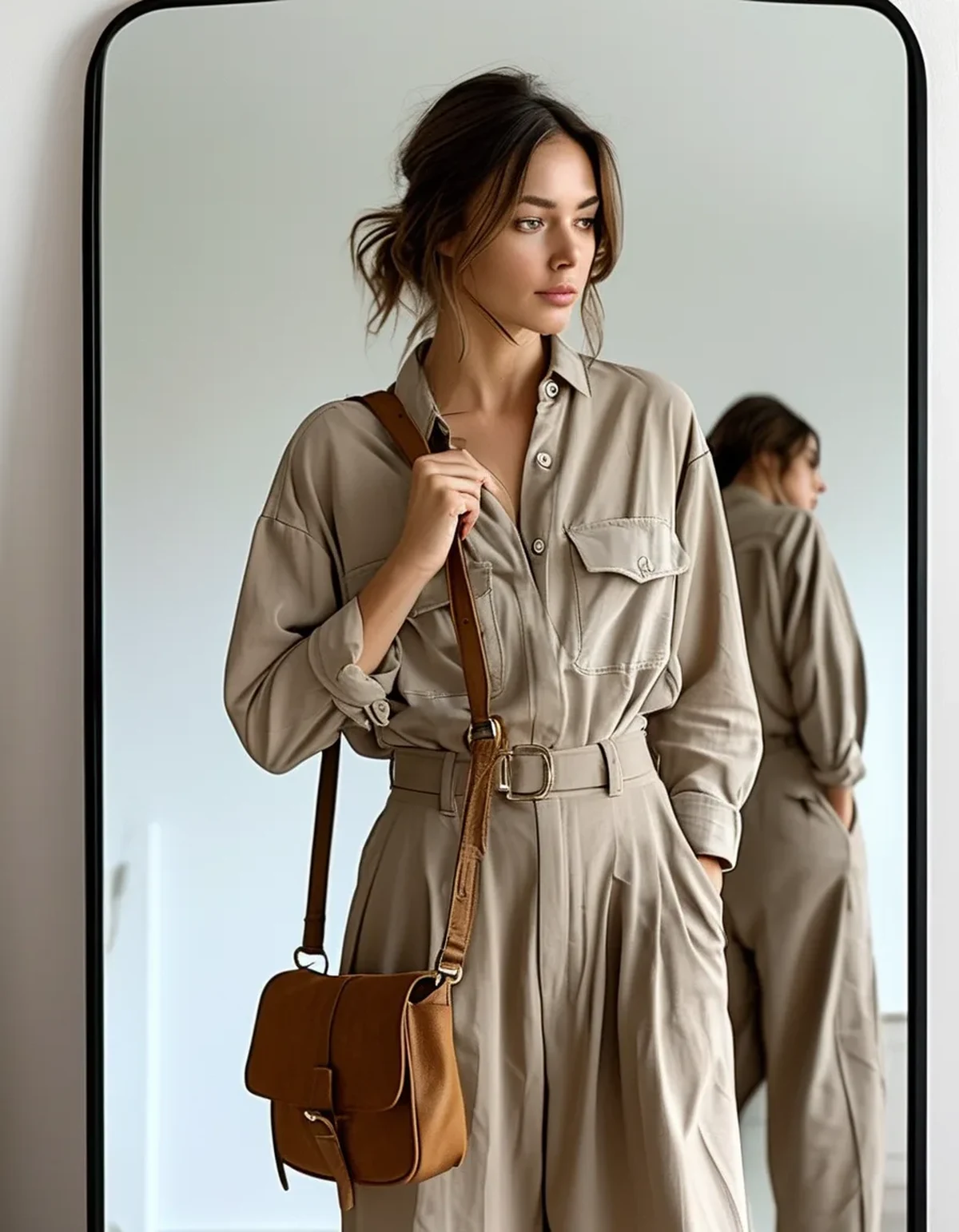
Why does a bag create a proportional break at all?
Because the eye reads horizontal interruptions as division points.
Any strong horizontal across the body - a belt, a hemline, a waistband, a bag - tells the eye where one section ends and the next begins. Your brain then reads the resulting proportions as your proportions, regardless of your actual measurements.
A bag is a particularly strong break because it combines several signals at once: a mass of contrasting colour, a hard edge, and a strap creating a diagonal line pointing to it. It is more visually assertive than a belt and is often the highest-contrast element in the outfit.
The classic proportional principle applies: a division higher on the torso reads as longer legs. If the eye reads your waist as sitting higher, everything below it reads as longer. A bag sitting at mid-thigh moves that reading downward and shortens the leg line significantly.
There is a second effect: width. A bag adds visible width at whatever level it sits. Placing it at the widest point of your body emphasises exactly the area most people are trying not to emphasise. For most body shapes, that is the hip - which is also, unfortunately, the most common default strap length.
And the strap itself draws a line. A crossbody strap creates a diagonal, and diagonals are visually flattering because they suggest length. A shoulder-carried bag hangs vertically with no diagonal, which is why the same bag can read completely differently depending on how you wear it.
Where should the bag actually sit?
It depends on what you want to emphasise, but there is a reliable default.
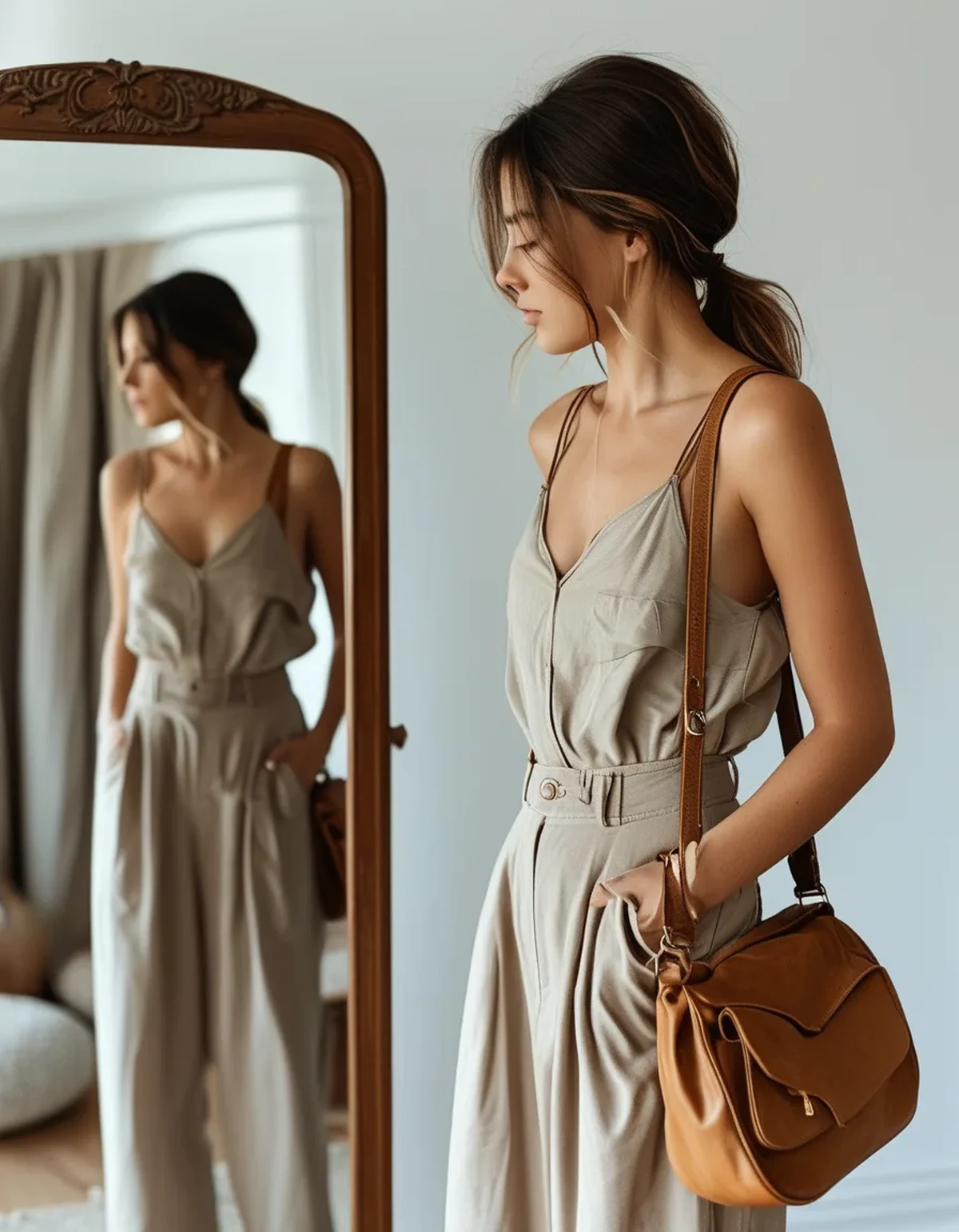
The default that works for most people: at or just above the natural waist. This is the narrowest part of the torso, so the bag sits where the body is already smallest, and the break reads high. For most people this means shortening the strap by two to four notches from where they currently have it.
If you want to lengthen the leg line: higher. Waist or above. The higher the break, the longer everything below reads. This is the single most effective adjustment for anyone who feels short-legged in photographs.
If you want to de-emphasise the hip: not at the hip. Either above it at the waist or well below it at the upper thigh. The one place to avoid is exactly at the widest point, which is where an unadjusted strap tends to land.
If you have a long torso and shorter legs: definitely waist or higher. This is where the adjustment does the most work.
If you have a short torso: slightly lower can help, sitting at the low waist or high hip, to avoid crowding the upper body.
And practical note: the same strap length sits differently over different clothes. A bag over a bulky fall coat sits lower and further out than the same bag over a t-shirt. Adjustable straps exist for this reason and most people never use the adjustment.
How does bag size interact with strap length?
Scale and placement have to be considered together, and getting one right cannot fix the other.
Bag size should relate to your frame, not to the trend. A large bag on a small frame reads as the bag wearing you; a very small bag on a tall frame can look accidental. The reliable check: the bag should be visually proportionate to your torso, not dwarfed by it or dominating it.
Bigger bags need shorter straps. A large bag hanging low creates a heavy mass at the widest point and pulls the whole silhouette down. The same large bag carried higher, tucked under the arm, reads structured and intentional.
Small bags can go anywhere and are the most forgiving. This is genuinely why the small crossbody has been so persistent - it creates a break without creating width.
Bag shape matters as much as size. A wide horizontal bag emphasises width at its level; a tall narrow bag or a vertical shape adds height rather than width. If you are drawn to the visual effect of a longer line, a vertical bag shape does some of that work for you.
And colour contrast controls how strong the break is. A bag matching your outfit creates a weak break; a high-contrast bag creates a very strong one. If you love a bag that sits in a spot you would rather not emphasise, matching the colour to your clothes reduces the effect substantially.
The combined rule: the more contrast and the more volume, the more the placement matters.
Myth vs Fact: Bags and Proportion
Myth: A long strap is more casual and therefore more current. Fact: Strap length has cycled repeatedly and neither reads as dated. The relevant question is what it does to your line, not what it signals.
Myth: A crossbody has to be worn crossbody. Fact: The same bag worn on one shoulder, cross-body, or held in the hand produces three different silhouettes. The cross-body diagonal is the most lengthening; the hand-held removes the break entirely.
Myth: Bag placement only matters for short people. Fact: It matters more for tall people in one specific way - a bag at hip height on a tall frame sits low and can make a long torso read even longer. Proportion is relative, not absolute.
Myth: You need different bags for different outfits. Fact: You need one adjustable strap and the willingness to move it. Most proportional problems attributed to the bag are strap length problems.
Myth: A belt bag is the same as a waist-height crossbody. Fact: They read differently - a belt bag sits flat against the body and adds width at the waist, while a crossbody at waist height hangs slightly away and creates a diagonal. The diagonal is the more lengthening of the two.
Does the seasonal shift to coats change the answer?
Yes, and this is the moment of year when most people’s strap setting quietly stops working.
A coat adds bulk, which pushes the bag outward and downward. The same setting that sat neatly at the waist over a t-shirt in August sits at the hip and stands away from the body over a fall jacket. This is why bags feel wrong in the first cool weeks and why people assume they need a different bag.
The fix is two or three notches shorter for coat season. Take the adjustment now rather than living with it - it is the single easiest seasonal styling adjustment there is.
Wearing the bag under versus over the coat changes the whole reading. Under the coat, the coat’s line stays unbroken and the silhouette reads long and clean. Over the coat, the bag divides the coat and shortens it visually. For a long coat, wearing the bag underneath preserves the vertical line that is the whole point of the long coat.
Layering also raises the visual waist. As you add a sweater and a jacket, the natural waist gets less visible, which is exactly when a bag placed at waist height does the most work - it re-establishes a waist reference the clothes have obscured.
And a practical fall note: heavier bags with winter contents pull straps down. A strap that measured correctly empty sits lower loaded. Adjust with the bag as you actually carry it, not empty in front of the mirror.
FAQ: Bag Strap Questions, Answered
What if my bag strap does not adjust short enough?
Most can be shortened with a simple leather punch or by a cobbler for very little money. A knot in the strap works as a temporary test - do it once to see whether the shorter length actually looks better before paying for the alteration.
Does this apply to backpacks and totes?
Yes, in a simplified form. A backpack worn with long loose straps drops the mass low and widens the hip line; tightened straps sit high and read cleaner. A tote carried in the hand creates no break at all, which is why it is so forgiving.
Which is more lengthening, a crossbody or a shoulder bag?
Generally the crossbody, because of the diagonal strap line. But a shoulder bag tucked high under the arm keeps the break above the widest point and works very well - the failure case for either is hanging low at the hip.
TL;DR:
- A bag is a horizontal break, and where it sits divides your body visually.
- At or just above the natural waist is the reliable default - usually two to four notches shorter than most people wear it.
- Avoid the widest point; that is where the default setting tends to land.
- Bigger and higher-contrast bags make placement matter more.
- Shorten by two or three notches for coat season, and wear the bag under a long coat to keep the line unbroken.
Go shorten your strap two notches and look in the mirror. That is the whole experiment.
Keep Reading
This article is for general informational and styling purposes only. Fit, sizing, and product availability may vary.